0 ratings

Item #:
79704707
2Pcs PWM to Voltage Module 0% -100% PWM Converted to 0-10V Voltage Digital Analog Signal Converter for PLC Signal Interface Switching
Item #:
79704707
ETB 1941
Price Details
Excluding Shipping & Custom charges ( Shipping and custom charges will be calculated on checkout )
*All items will import from US
0 ratings
Write a review
In stock
 Imported from USA store
QTY:
Order now and get it around Thursday, July 02
Secured transaction
Ubuy works hard to protect your security and privacy. Our advanced payment security system ensures confidentiality by encrypting your information during transmission using AES (Advanced Encryption Standards) and SSL (Secure Socket Layer) protocols. Your payment details are 100% secure as we do not share your payment details with third party sellers.
Our Top Logistics Partners


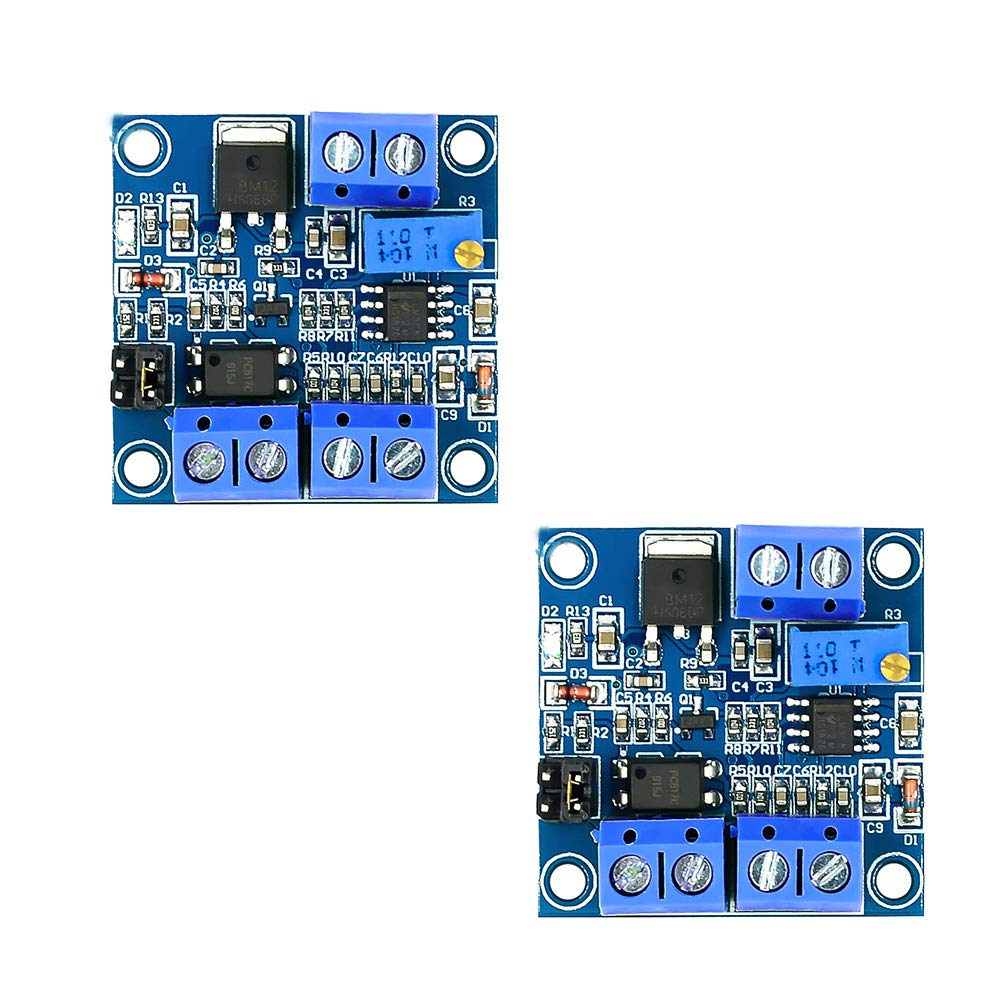
The PWM transfer voltage module converts the PWM digital signals into 0 to 10V analog signals.

Fast
Shipping

Free
Return*

Secure Packaging

100% Original Products

PCI DSS Compliance

ISO 27001 Certified


Note: Step Down Voltage Transformer required for using electronics products of US store (110-120). Recommended power converters Buy Now.


What Stands Out
High Compatibility
Seamlessly converts PWM signals into standard 0-10V voltage outputs, ensuring compatibility with various PLCs and industrial equipment.
Precise Control
Offers precise control over voltage outputs from 0% to 100%, enabling accurate simulations and flexible management of analog signals in diverse applications.
Compact Design
Designed for space efficiency, this module's compact size allows easy integration into existing systems without compromising performance or functionality.
Product Details
- Converts PWM digital signals to 0-10V analog signals with 5% allowable error
- Used for PLC signal interface switching and industrial control boards
- Output voltage regulated by adjusting PWM duty ratio
- Small size, easy to use, and operate with embedded MCU technology
- Operates at DC 12V-30V with PWM receiver frequency of 1KHZ-3KHZ
- Package includes 2pcs of the PWM to Voltage Module
| Item Weight | 0.25 lbs (110 grams) |
Who Should Buy?

-
Automation Engineers
Ideal for engineers looking to interface PWM signals with PLCs for better control over automation processes.
-
Home Automation Enthusiasts
Perfect for DIY enthusiasts who want to integrate PWM control into their home automation systems effectively.
-
Educational Purposes
Great for students and educators needing practical examples of PWM to voltage conversion in electronic projects.

-
General Consumers
Not suitable for everyday users without technical knowledge of PWM and signal interfacing; requires specialized understanding.
-
High Precision Applications
May not meet the stringent accuracy requirements needed in high precision applications or sophisticated engineering tasks.
-
Non-Technical Users
Users lacking technical expertise in electronics may find installation and application challenging without guidance.
Product Description
2Pcs PWM to Voltage Module 0% -100% PWM Converted to 0-10V Voltage Digital Analog Signal Converter for PLC Signal Interface Switching
About This Item
The WSDMAVIS PWM to Voltage Module is the perfect solution for converting PWM signals to analog voltage signals. Whether you're working with PLC signal interfaces or need to switch between different signal types, this module has got you covered. With this module, you can easily convert PWM signals ranging from 0% to 100% to analog voltage signals ranging from 0-10V. This allows for seamless integration with various devices and systems that require analog voltage input. The WSDMAVIS PWM to Voltage Module comes in a convenient pack of 2, providing you with a backup or the opportunity to use it in multiple applications.
Each module is designed and manufactured by WSDMAVIS, a trusted brand known for its high-quality electronic components. Thanks to its compact design, the module is easy to install and can be integrated into your existing setup without any hassle. It features a reliable switching interface that ensures smooth and efficient signal conversion. Whether you're a seasoned professional or a DIY enthusiast, the WSDMAVIS PWM to Voltage Module is a must-have for your electronic projects. Its versatile functionality and reliable performance make it an essential tool for anyone working with PWM signals. Upgrade your signal conversion capabilities with the WSDMAVIS PWM to Voltage Module.
Order your pack of 2 modules today and experience the convenience and efficiency it brings to your projects.
Have any Query? Chat with us
Customer Questions & Answers
-
Question:
What is a PWM to Voltage Module?
Answer: A PWM to Voltage Module is a device that converts Pulse Width Modulation (PWM) signals, typically used in electronic controls, into a corresponding analog voltage output. This specific model converts PWM signals ranging from 0% to 100% into a linear voltage signal that ranges from 0V to 10V. This conversion is essential in interfacing with devices that require voltage signals, such as PLCs (Programmable Logic Controllers), allowing for smooth communication between digital and analog systems in automation applications. -
Question:
How does the PWM to Voltage conversion work?
Answer: The conversion process involves taking a PWM signal, which consists of varying signal pulses, and averaging these pulses into a stable output voltage. The module interprets the duration of the 'on' state of the PWM signal to determine the output voltage. For instance, a 50% duty cycle would result in a 5V output. This functionality is crucial in fields like robotics and industrial automation, where precise control over voltage signals is necessary to achieve desired performance in various applications. -
Question:
What applications can this voltage converter be used for?
Answer: This voltage module is versatile and can be widely used in industrial automation, motor speed control, light dimming, and sensor interface applications. For instance, if you are using a PLC to control the speed of an electric motor, you can use this module to convert PWM signals from the PLC into an analog voltage to effectively control the motor's speed. This dynamic functionality enhances automation in manufacturing processes, making it an essential tool in modern industrial settings. -
Question:
Is the PWM to Voltage Module easy to use?
Answer: Yes, the PWM to Voltage Module is designed for easy installation and use. It typically comes with clear markings for input and output connections, allowing users to set it up quickly without complex configurations. Many users find it straightforward to integrate into existing projects, particularly in educational or hobbyist setups. This ease of use makes it not only suitable for professionals but also accessible for beginners who are experimenting with automation and control systems. -
Question:
What are the voltage output specifications?
Answer: The PWM to Voltage Module provides a linear output voltage ranging from 0V to 10V, which corresponds directly to the PWM signal input. This allows for precise control, where a 0% PWM duty cycle outputs 0V, and a 100% duty cycle results in a full 10V. This proportional relationship is essential for applications requiring fine-tuned voltage adjustments, such as controlling actuators, sensors, or other electronic components in various circuit designs. -
Question:
Can this module handle different PWM frequencies?
Answer: Yes, this PWM to Voltage Module is capable of handling a range of PWM frequencies. However, it is generally optimized for standard frequencies commonly used in control applications, like 1kHz to 5kHz. Properly matching the frequency ensures stable output voltage conversion. This flexibility makes it an advantageous choice for users who might deal with varying PWM signal sources in different projects or applications. -
Question:
Is it necessary to provide an external power supply?
Answer: Yes, the module typically requires an external power supply to operate. This is essential because it needs power to convert the PWM inputs into corresponding output voltages. Ensuring a suitable and stable power source helps maintain the accuracy of the voltage output. Users should refer to the module's specifications to determine the required voltage and current ratings for optimal performance, ensuring reliable operation in their applications. -
Question:
What connectors are used in this module?
Answer: The PWM to Voltage Module usually features standard connector types such as screw terminals or headers for easy wiring. These connectors allow users to securely attach the input PWM signal and output voltage lines without requiring advanced soldering skills. Its versatility in connectivity means it can be integrated seamlessly into a variety of setups, whether in a professional environment or a DIY project, enhancing user convenience during installation. -
Question:
How do I troubleshoot issues with this module?
Answer: If you encounter issues with the PWM to Voltage Module, first check all connections to ensure they are secure and correctly wired according to the manufacturer's guidelines. Verify that your PWM signal is within the correct voltage and frequency range. Additionally, use a multimeter to test the output voltage against the expected values based on the input PWM signal. If problems persist, consult the product manual for specific troubleshooting steps or reach out to technical support for assistance. -
Question:
Where can I buy the 2Pcs PWM to Voltage Module in Ethiopia?
Answer: You can purchase the 2Pcs PWM to Voltage Module at Ubuy, a trusted online retailer that offers a wide range of electronic components. Ubuy provides an easy shopping experience with quick delivery options and reliable customer service, ensuring you can acquire this module conveniently for your projects or applications.
WSDMAVIS Power Converters Editorial Review
The WSDMAVIS PWM to Voltage Module has received mixed reviews from customers. One user reported that despite following the calibration instructions, the maximum output voltage they were able to achieve was 5.3V, falling short of the expected 0-10V range. They noted that using different PWM frequencies and input voltages did not change the maximum output. Another customer mentioned that while they could not get the board to work as intended with their setup, they were able to obtain variable voltage output when using another breakout board with a higher current. However, they expressed frustration at the lack of specifications and details on limitations provided with the product. Overall, many users encountered the issue of the module not being able to produce the expected output voltage, with measurements Consistently capping at around 5.3V. Some also expressed dissatisfaction with the lack of information and specifications provided for the module. While one user found a workaround with a different breakout board, they still highlighted the time and effort required to troubleshoot the product.
Customer Reviews & Ratings
1 customers ratings
-
5 Star
0%
-
4 Star
100%
-
3 Star
0%
-
2 Star
0%
-
1 Star
0%
Review this product
Share your thoughts with other customers
Pros
- Affordable price point
Cons
- Inadequate output voltage range (5.3V maximum)
Product Price History
Important information
- Limitations : For products shipped internationally, please note that any manufacturer warranty may not be valid; manufacturer service options may not be available; product manuals, instructions, and safety warnings may not be in destination country languages; the products (and accompanying materials) may not be designed in accordance with destination country standards, specifications, and labeling requirements; and the products may not conform to destination country voltage and other electrical standards (requiring use of an adapter or converter if appropriate). The recipient is responsible for assuring that the product can be lawfully imported to the destination country. When ordering from Ubuy or its affiliates, the recipient is the importer of record and must comply with all laws and regulations of the destination country.
- Not all the products listed on Ubuy are for sale, as Ubuy is a global search engine. Products are subject to export/trade regulations.
ETB 1941
Order now and get it around Thursday, July 02
This item is not restrict in my country.(Please click on above link if this item is not restrict in your country, So our team will review and allow.)
QTY:
Secured transaction
Ubuy works hard to protect your security and privacy. Our advanced payment security system ensures confidentiality by encrypting your information during transmission using AES (Advanced Encryption Standards) and SSL (Secure Socket Layer) protocols. Your payment details are 100% secure as we do not share your payment details with third party sellers.
Our Top Logistics Partners
Fastest cross-border delivery
Features & Benefits
- Converts PWM digital signals into 0 to 10V analog signals
- Can be used as signal interface switching for PLC or other industrial control boards
- Regulated output voltage through adjusting duty ratio of PWM
- Small size and easy to use in different places
- Easy to operate, fine-tuned by potentiometer
- MCU embedded technology